Choosing Your Sensor
| Grillo Pulse | Grillo One | Grillo Slide | |
|---|---|---|---|
| Measures | Earthquakes, from small to strong | Strong ground shaking | Slow ground movement |
| Sensors | Vertical geophone and three-axis accelerometer | Three-axis accelerometer | RTK GNSS, plus a low-power accelerometer for motion detection |
| Connectivity | Cellular or Ethernet, by variant | Ethernet or Wi-Fi | LTE at the base; rovers use a radio mesh |
| Timing | GPS, or network time (NTP) | Network time (NTP) | GPS (GNSS) |
| Power | 12 V DC input; off-grid with a solar kit (panel and battery) | USB-C, 5 V | Internal battery with solar input |
| Readings | Continuous in real time, or triggered by shaking | Continuous, in real time | Every 6 hours |
| Data in the dashboard | Health, waveforms, and triggers or earthquake detection, by plan | Health, waveforms, and earthquake detection, by plan | Movement in mm, health, exports, raw GNSS files |
| Firmware updates | By Grillo for now | Over the air from Grillo Cloud | Over the air |
| Typical site | Field and remote stations | Buildings and sites with mains power and a network | Slopes and embankments |
| Dashboard | Grillo Cloud | Grillo Cloud | Grillo Cloud for Slide |
Grillo Pulse
Choose Pulse for a seismic network that needs to record small earthquakes as well as strong ones. Pick the cellular variant for sites without a wired network, or the Ethernet variant where you have one.
Pulse has a single 12 V DC input. It has no built-in solar or battery: at an off-grid site, power it from a Grillo solar kit, or from your own solar charge controller and battery that supply 12 V DC.
Grillo One
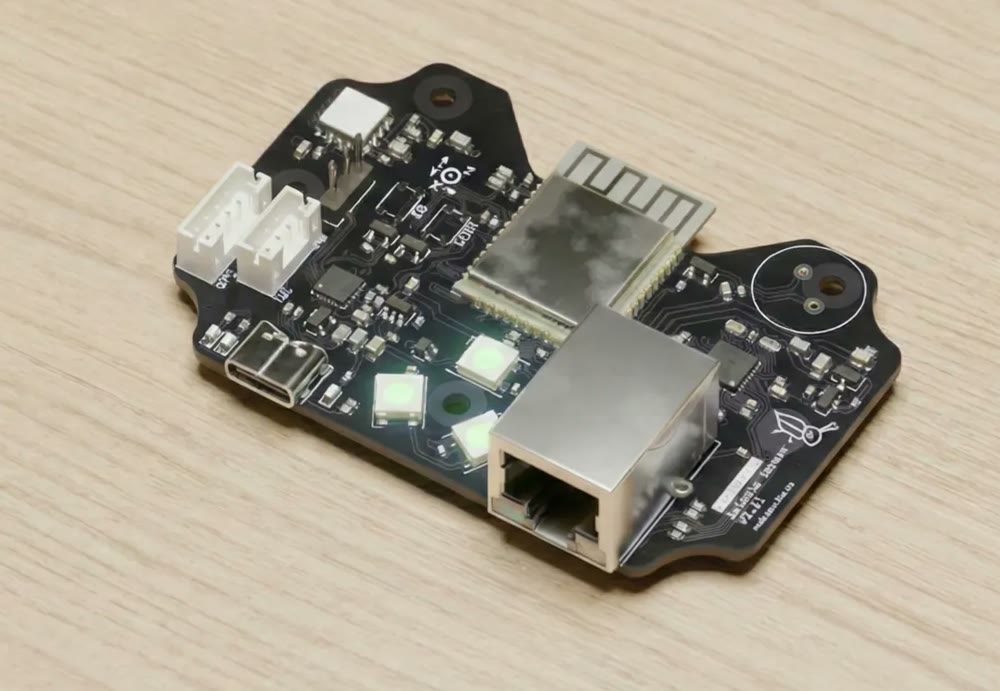
Choose One to add strong-motion stations where power and a network already exist, for example in buildings. It runs from USB-C power, and its hardware and software are open source.
Grillo Slide
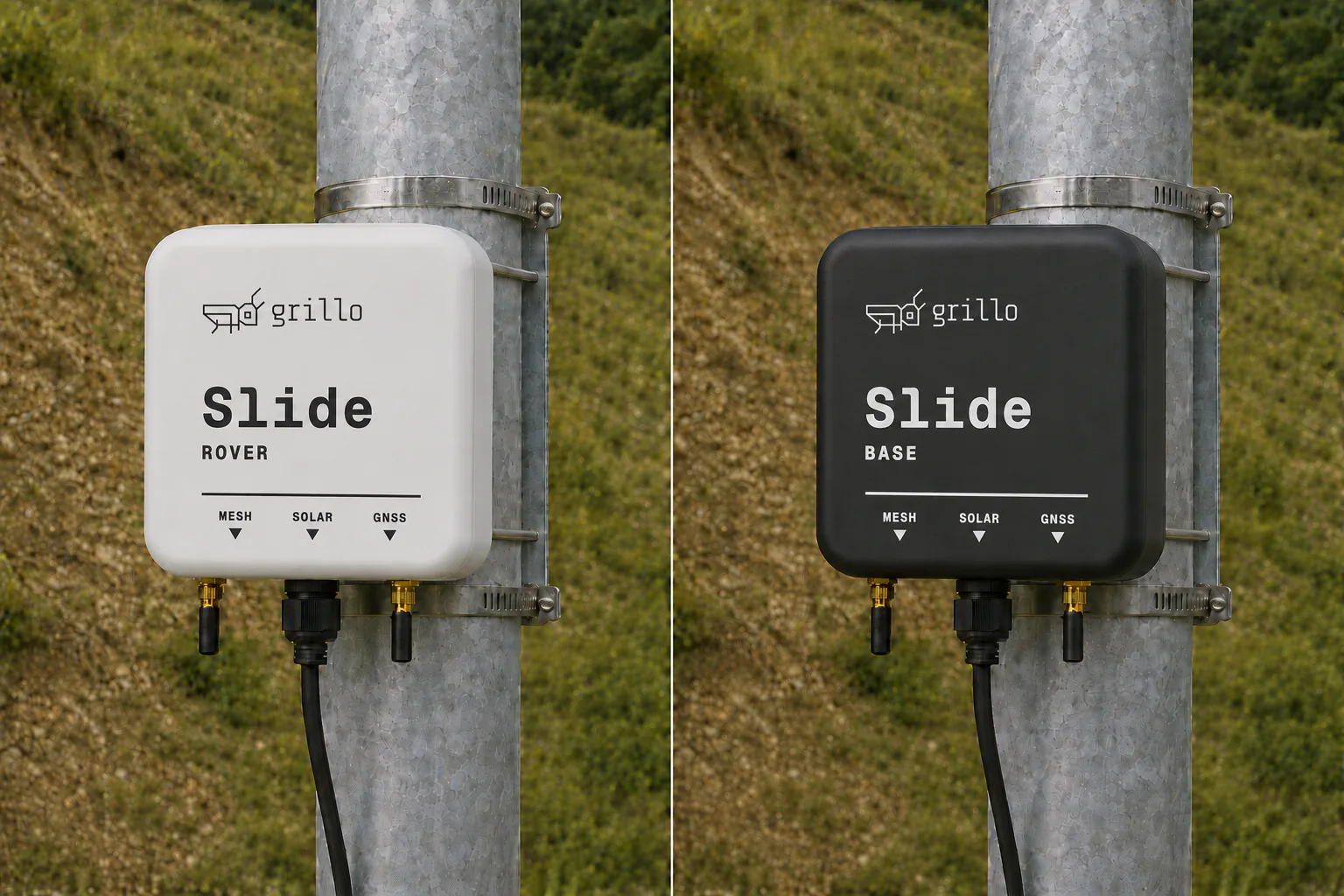
Choose Slide to monitor a slope for slow movement. One base on stable ground supports up to eight rovers on the ground being monitored. It runs on battery and solar, so it needs no mains power or network at the site, only mobile coverage at the base. See Landslide Monitoring with GNSS.
Before ordering
Confirm with Grillo:
- What you need to measure, and how sensitive it must be
- Indoor or outdoor installation
- Cellular, Ethernet, or Wi-Fi availability at the site
- Power and backup requirements, including whether you need a solar and battery system for Pulse
- Whether seismic data should go to Grillo or to your own server
- Which Grillo Cloud plan fits: triggered recording for structures, or continuous recording with or without earthquake detection
Contact Grillo for deployment guidance.